Processes
You don't have an AI problem. You have a process problem.
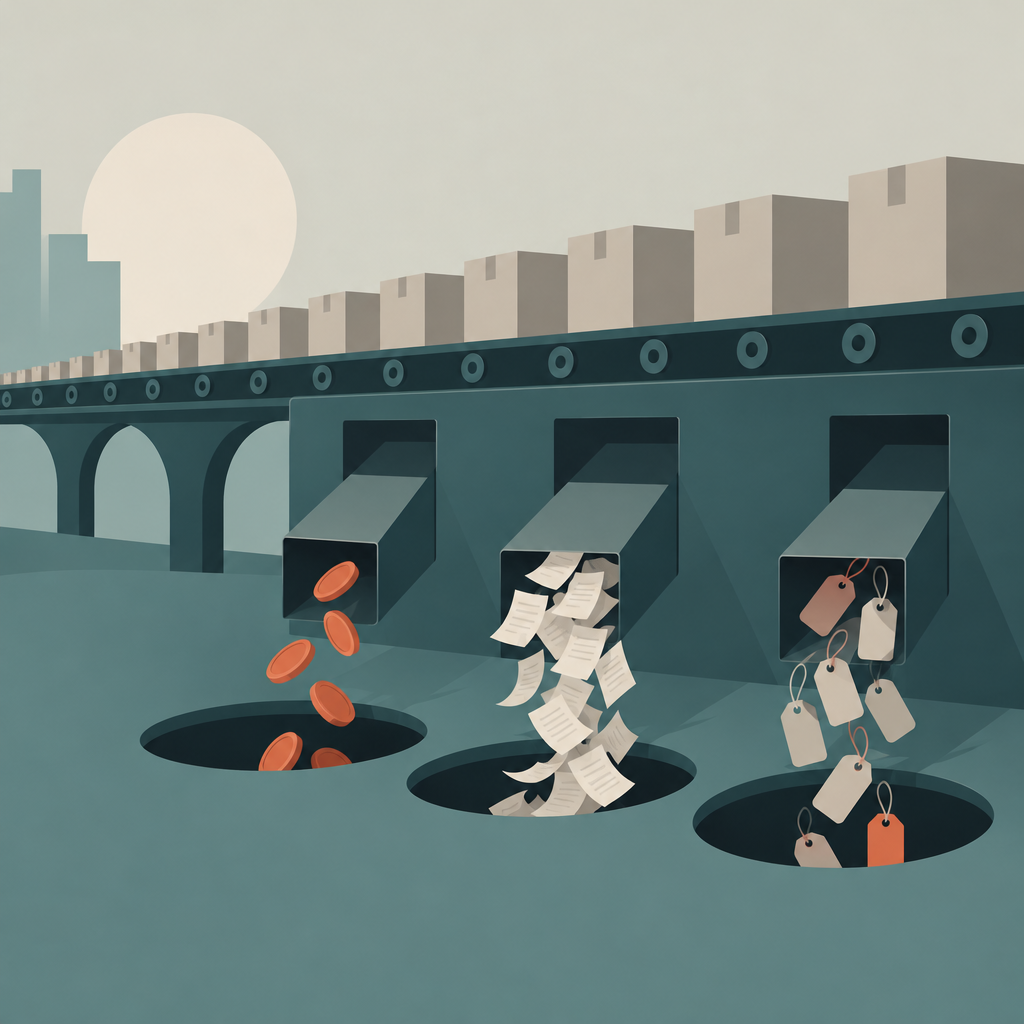
Putting AI on top of a messy flow doesn't make the work faster – it makes the disorder faster. That's why I always start with the process.
By Greger Thörn · · 3 min read
Most companies I talk to describe the same thing. Someone on the management team has tried ChatGPT, been impressed, and now there is a mandate: we need to start using AI. Then comes the question nobody can quite answer. Start with what?
My answer is almost always the same. You don't have an AI problem. You have a process problem, and AI won't solve it. It will make it faster.
What a process problem looks like
It rarely looks dramatic. It looks like an ordinary working day.
An order arrives by email. Someone keys it into the business system. Someone else checks that the price matches the contract, which sits in a folder on the server. The warehouse gets an email. Finance gets another. When the invoice is due, a third person looks at the order again, because the first person doesn't always fill in the cost centre.
That is an invoicing flow with eleven manual touchpoints. None of the steps is wrong. Each one was added for a reason, usually because something went wrong once. But nobody has looked at the whole chain in five years, and in the meantime the company has grown from 15 to 60 employees.
The same pattern shows up in the monthly report that takes nine working days, in the quote that needs three approvals, in the spreadsheet only one person dares to touch.
What happens when you put AI on top
Say you buy an AI tool that reads incoming orders and fills in the business system automatically. Step one now takes seconds instead of minutes.
Steps two to eleven are still there. The contract check, the two emails, the third person looking again. You have made one step in eleven faster and will find that the flow as a whole barely moves quicker, because the time was never in the data entry. It was in the waiting between steps.
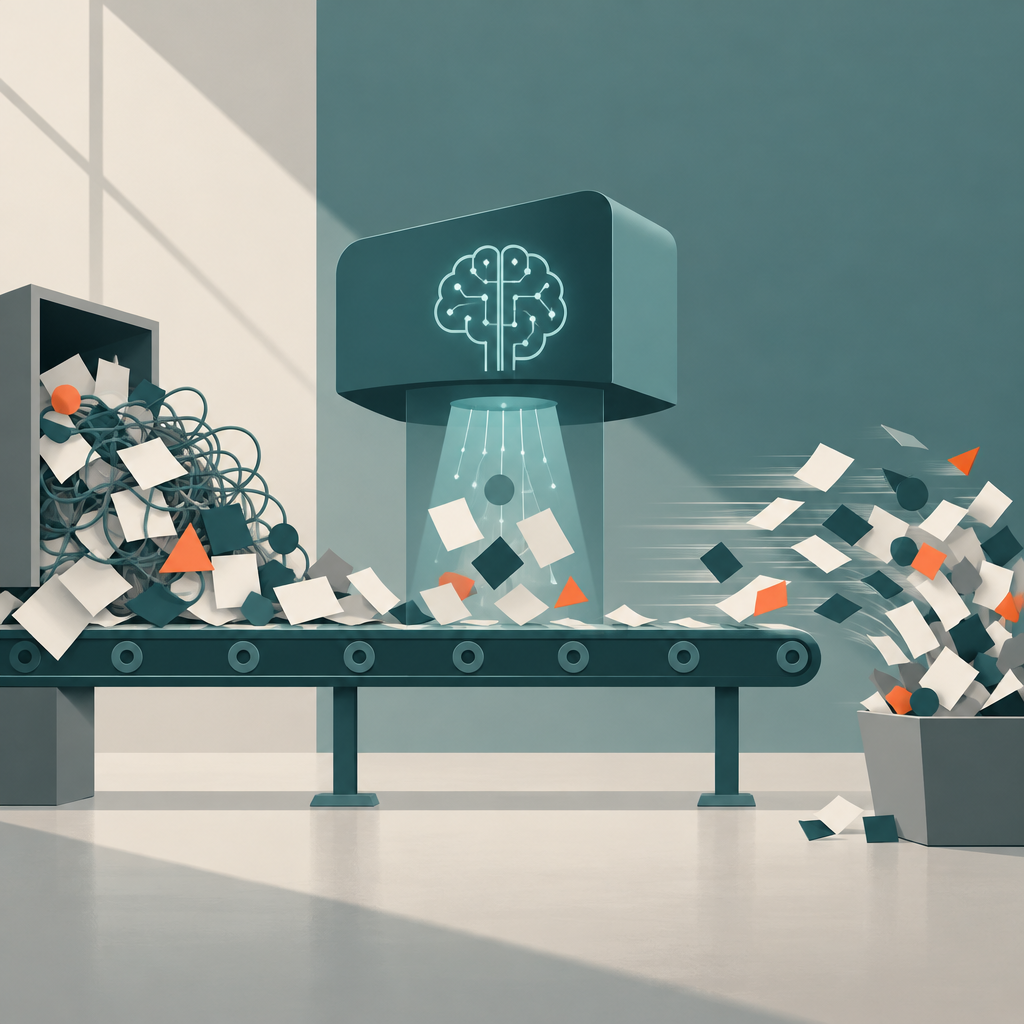
It gets worse when AI starts producing errors faster. If the cost centre is often missing today, it will be missing just as often tomorrow, but now across a hundred orders an hour instead of ten. The disorder has become efficient.
This is not an argument against AI. It is an argument for order.
The process first, then the tool
What I do instead looks dull on paper, and it is what delivers results.
- Map the flow with numbers. Not on a whiteboard with sticky notes, but by following ten real orders from start to payment and timing every step. How long does the step take? How long does the case sit waiting before the next step starts? Who does it?
- Remove what isn't needed. In the typical invoicing flow described above, usually two of the eleven steps turn out to be necessary: registering the order correctly and sending the invoice. The rest are checks that were added because step one was done carelessly. Get step one right and the checks disappear on their own.
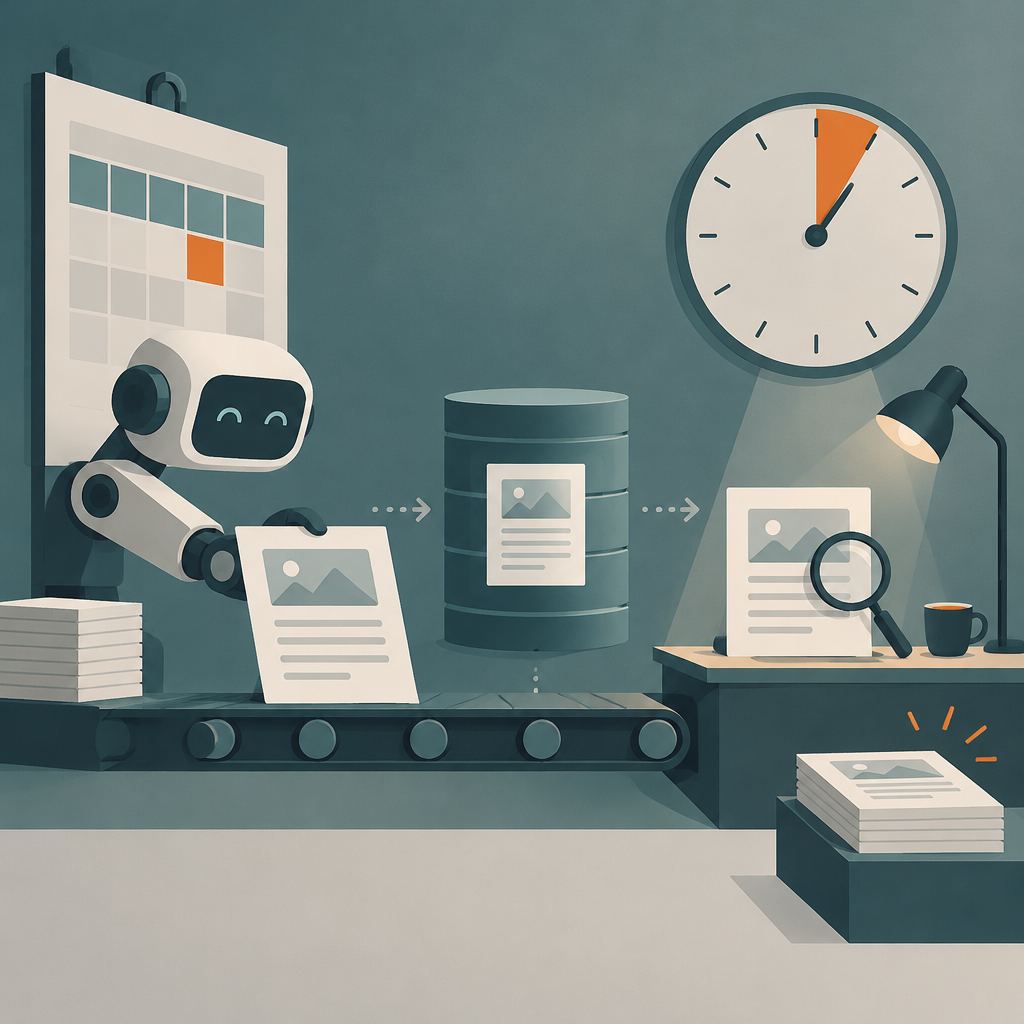
- Automate what remains. Now there are two steps, they are clearly defined, and the question "what should AI do here?" has an answer. Read the order, match it against the contract, flag deviations, register the rest. That is a bounded task that can be built, tested and measured.
The order matters. Automate first and you lock in today's process, including every step that is really a symptom. Simplify first and you have often solved half the problem before buying a single tool.
How to know where to start
You don't need a consultant to find the first flow. Ask three questions at your next management meeting:
- Which recurring piece of work do we wait for most often? The report, the quote, the approval?
- Where do we do the same thing twice? Entering the same data into two systems, checking something that has already been checked?
- Which spreadsheet would bring the business to a halt if the person who owns it were off sick for two weeks?
The answers almost always point to the same two or three flows. One of them is where you should start. Not with AI, but by understanding how the work actually gets done today.
Once that picture exists, the AI question suddenly becomes simple. It is no longer about which tool is best, but about which step should go and which should run automatically. That is a question with an answer, and it is usually where I come in.